

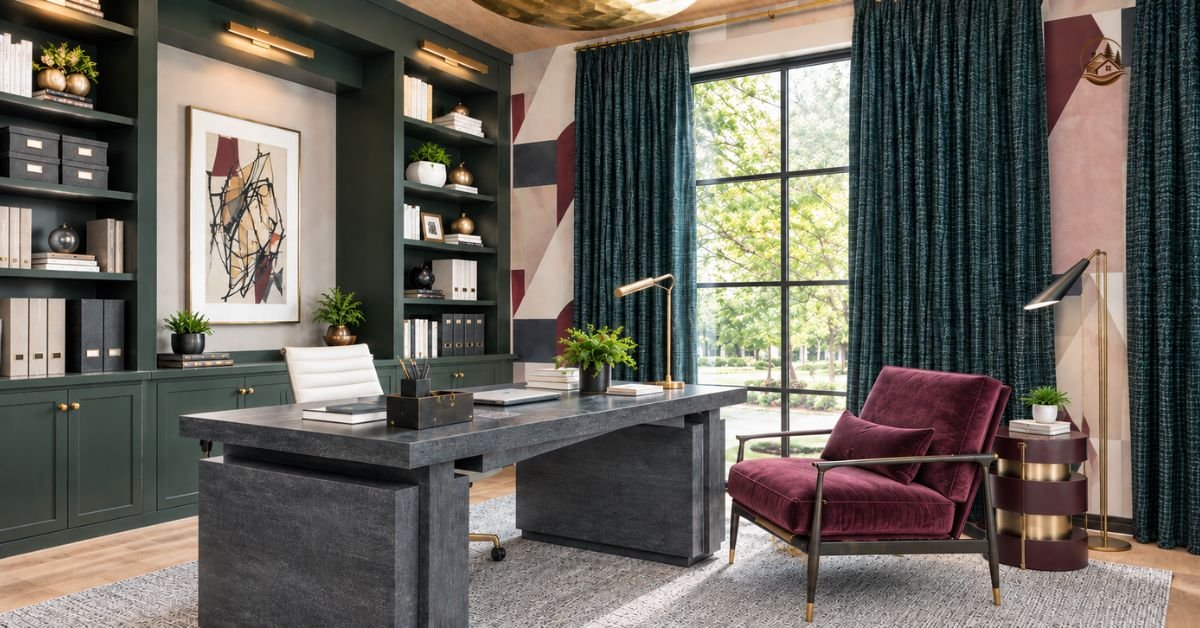
A messy office can make even a simple workday feel harder than it needs to be. Papers pile up, cables get tangled, and the things you use most somehow end up buried under everything else. If your workspace feels crowded, you’re probably looking for a simple way to make it calmer and easier to use.
These Office Organization Ideas can help you create a cleaner and more functional workspace without making it feel boring or overly styled. From smarter shelving to hidden storage and better desk layouts, you’ll find practical ways to use your space more effectively.
Seamless Shelves
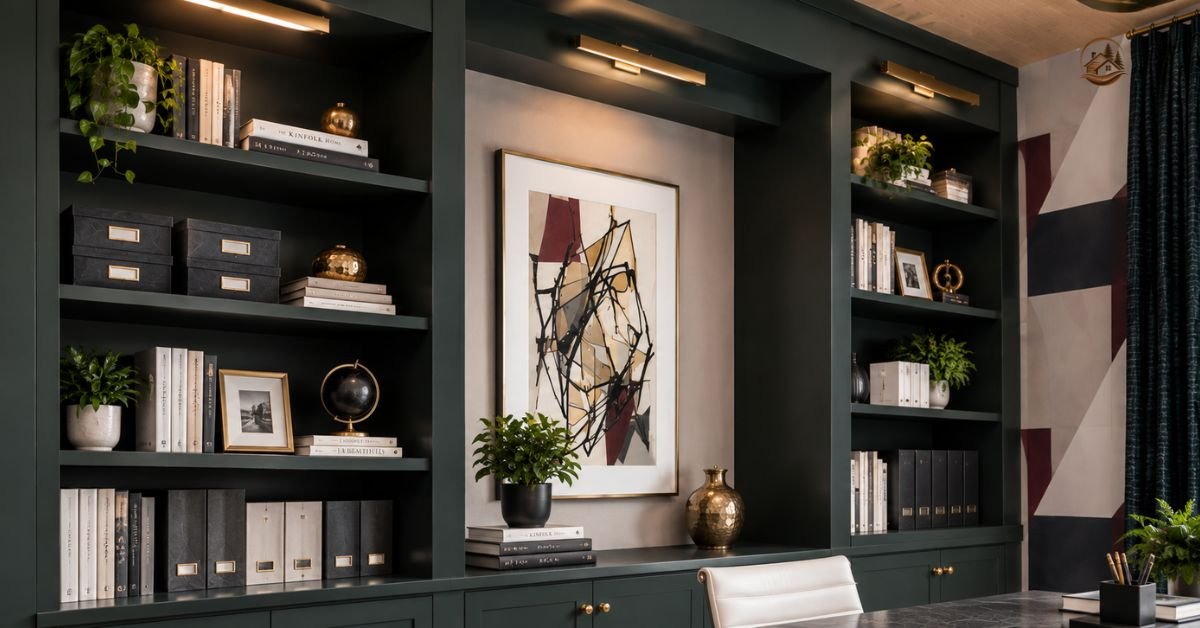
Seamless shelves can make a home office feel organized without making the storage look bulky. Wall-to-wall shelving gives books, files, decor, and everyday essentials a dedicated place while keeping the floor clear. This is especially useful when you want to maximize workspace in a smaller room.
You can use open shelving for items you reach for regularly and closed sections for things you don’t want on display. Matching the shelves with the room can also help blend storage with decor. The result is an organized workspace that feels like part of the room rather than an extra piece of furniture.
Must Read this Article: Click Here
Hide a Pinboard
A pinboard is useful for reminders, notes, calendars, and small pieces of inspiration, but it can quickly look messy. Instead of leaving it fully exposed, consider placing it behind a cabinet door, inside a wardrobe, or within a framed section of your office storage. This keeps important information nearby without adding visual clutter.
You can also use the hidden board for papers that you need during the week. When everything has a place, it becomes easier to keep your desk organized. This simple approach can help create a clean workspace while still giving you quick access to important reminders.
Employ a Credenza
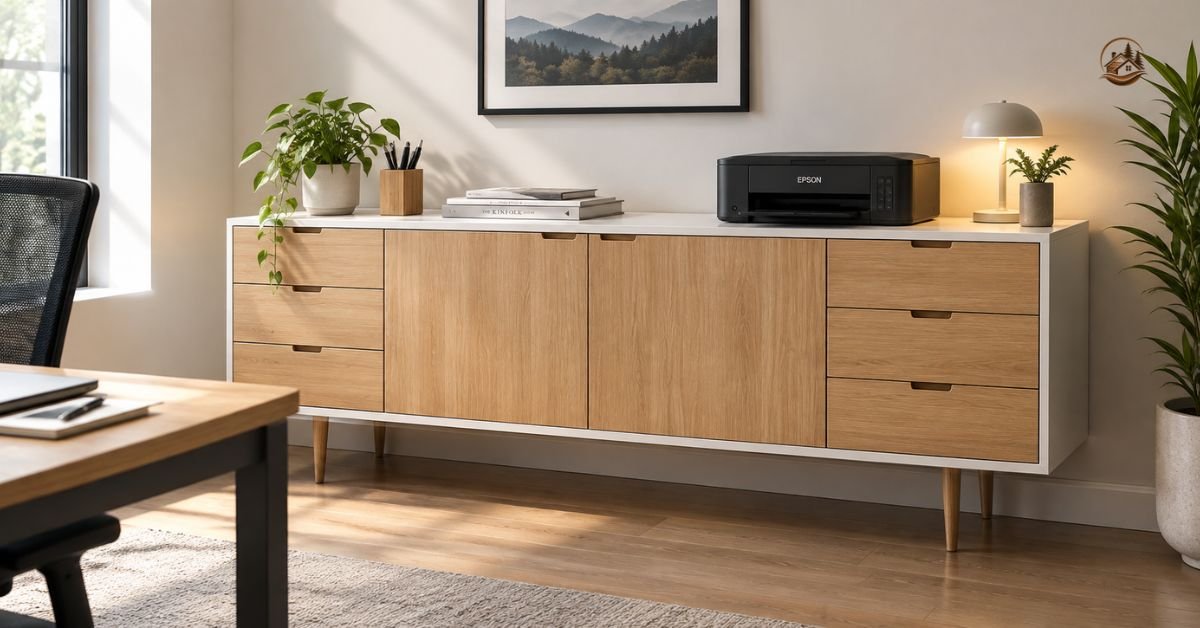
A credenza can provide valuable storage without taking over your office. Its wide surface works well for a printer, small decor, or office accessories, while the cabinets underneath can hide files and supplies. It’s a practical choice when you need extra office storage solutions.
Choose a credenza with enough compartments for the items you actually use. You can keep paperwork in one section, electronics in another, and less-used supplies somewhere else. This makes it easier to organize office supplies while keeping the main desk free.
Utilize Classic Built-Ins
Built-in storage is a smart option when you want to use every available part of a room. Floor-to-ceiling cabinets or shelves can turn an empty wall into useful home office storage. They’re particularly helpful in rooms where standalone furniture would take up too much floor space.
Classic built-ins can also be customized around your needs. You might include drawers for paperwork, shelves for books, and cabinets for equipment. With the right layout, built-in office storage can create a functional workspace without making the room feel crowded.
Add Desktop Boxes
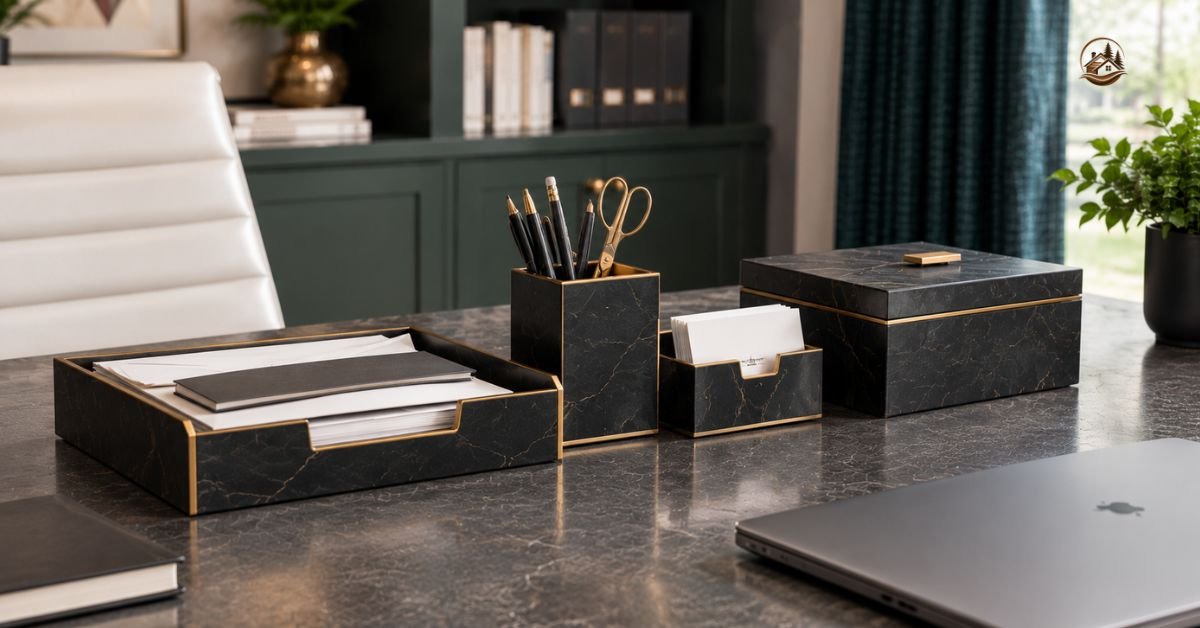
Small desktop boxes are an easy way to control the little things that often create a messy desk. Pens, sticky notes, charging accessories, clips, and other desk accessories can quickly spread across your work surface. A few simple boxes can keep these items together and within reach.
Try assigning each box a specific purpose instead of putting everything into one container. For example, one can hold writing supplies while another stores cables or small electronics. This makes desk organization ideas easier to maintain because you’ll know exactly where each item belongs.
Choose a Large Desk Space
A larger desk can be useful when your work involves several devices, notebooks, documents, or other equipment. Instead of constantly moving things around, you’ll have enough room to create separate areas for different tasks. A generous work surface can also make your ergonomic desk setup more comfortable.
However, a large desk doesn’t mean every inch should be covered. Keep frequently used items nearby and move everything else into drawers or storage. The goal is to create a comfortable work area where you have room to focus without unnecessary clutter.
Convert Wardrobes
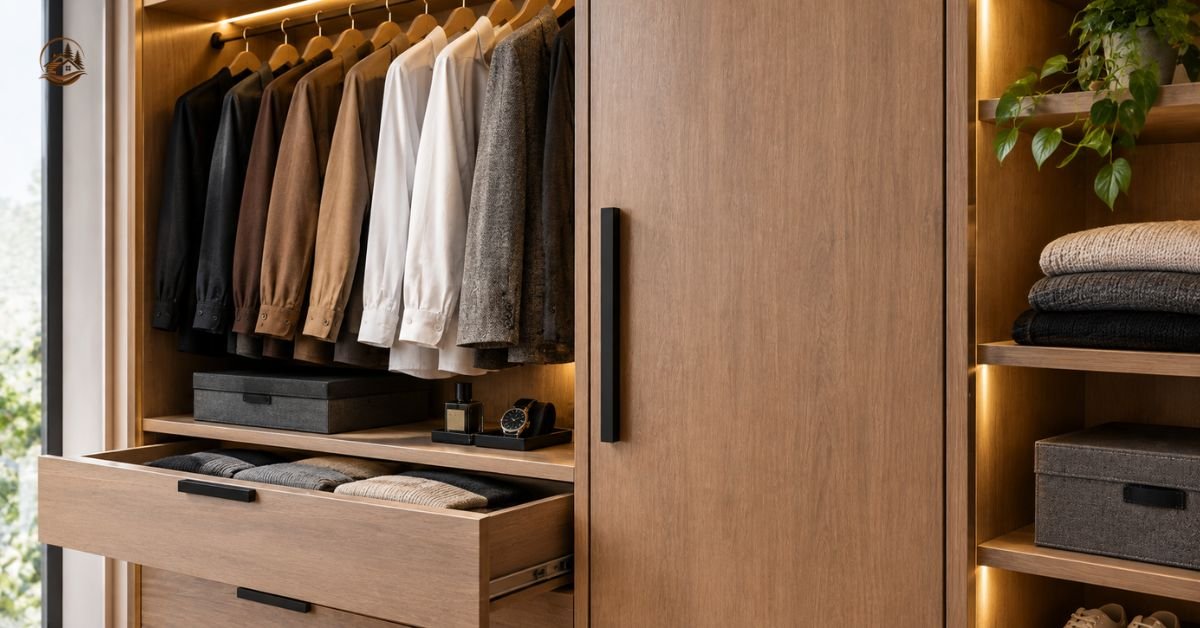
An unused wardrobe can become a surprisingly effective workspace. With a suitable desk surface, shelves, and lighting, you can turn the inside into a compact work area that disappears when you close the doors. This is one of the more creative small home office ideas for rooms with limited space.
Use the upper sections for office supplies and less-used equipment while keeping everyday items closer to the desk. You can also add a small pinboard or cable management system inside. When work is finished, simply close the doors to hide office clutter and give the room a cleaner appearance.
Use Height to Your Advantage
When floor space is limited, look upward. Tall shelving, vertical cabinets, and wall-mounted shelves can help you make use of vertical space without making the room smaller. This approach is particularly useful in a compact home office.
Keep the items you use every day at eye level or within easy reach. Higher shelves can hold books, backup supplies, or decorative pieces. By using unused wall space effectively, you can save floor space while still adding plenty of storage.
Read this Article: Click Here
Combine Open and Closed Shelves
A mixture of open shelving and closed storage gives you flexibility. Open shelves are useful for books, plants, and attractive accessories, while cabinet doors can hide paperwork, cables, and less attractive supplies. This combination can make home office shelving more practical.
The key is to give each type of storage a clear purpose. Use open areas for things you don’t mind displaying and closed sections for items that create visual clutter. This balance can make the office feel organized without making everything look hidden.
Install Overhead Lighting
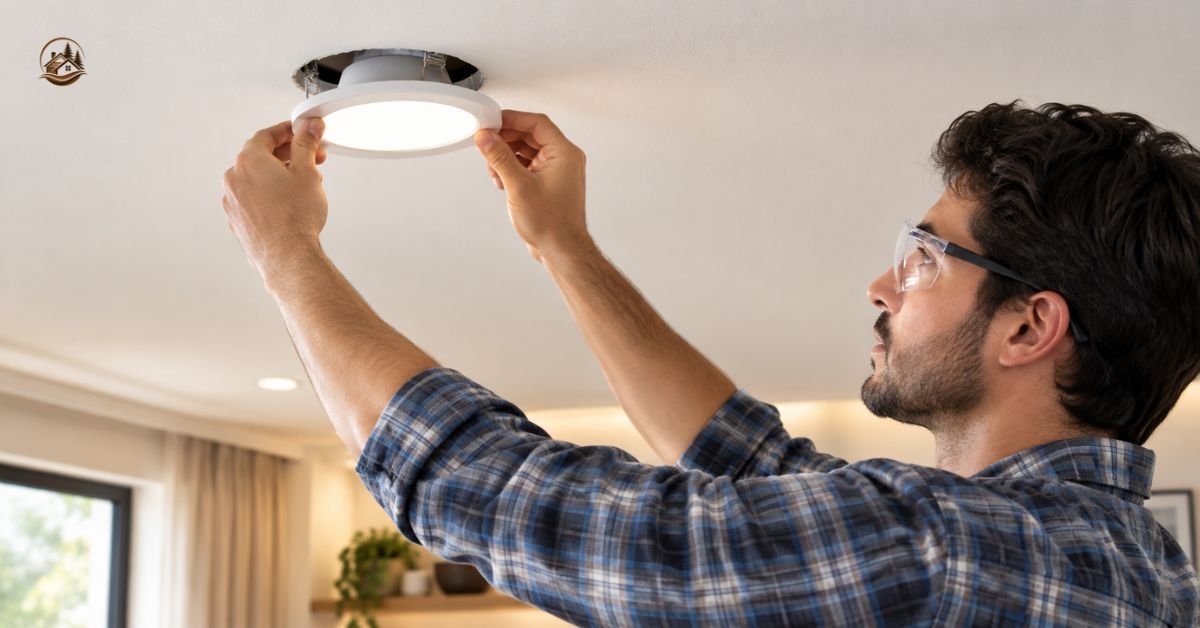
Good lighting can make an organized office more comfortable to use. Overhead lighting provides general illumination across the room, while additional task lighting can brighten the area where you work. Together, they can improve workspace lighting without taking up valuable desk space.
Choose lighting that works with your room and desk position. If your office already receives plenty of daylight, you may only need lighting for darker hours. Keeping the lighting simple also helps maintain a clean and uncluttered appearance.
Use Baskets and Bins
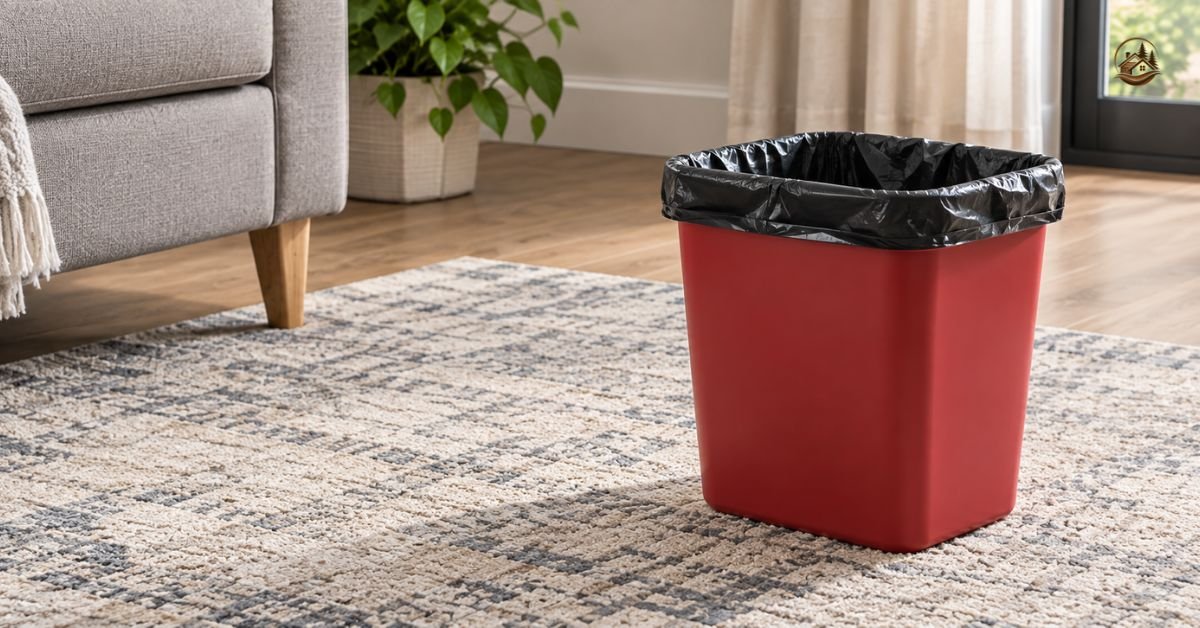
Baskets and bins are useful when you have many small items that need a home. They can hold extra stationery, cables, notebooks, craft materials, or other office supplies. Labeling them can make it even easier to find what you need without searching through several containers.
Choose storage containers that fit your shelves or cabinets properly. When everything fits neatly, the room looks more organized and it becomes easier to maintain a tidy office. Baskets can also soften the appearance of a room filled with hard furniture and cabinets.
Optimize Your Desk for Tech
Modern workspaces often have laptops, monitors, keyboards, chargers, speakers, and several other devices. Without a plan, these items can quickly take over your desk. Start by organizing technology and cables so that only the equipment you actually use stays visible.
Cable management can make a noticeable difference. Use simple clips, sleeves, or built-in openings to keep wires under control. Position your monitor and keyboard comfortably, and keep chargers in an accessible location. A cleaner setup can improve desk efficiency while making the workspace easier to use.
| Tech Items | Organization Ideas |
| Laptop | Keep it centered on the desk |
| Monitor | Place it at a comfortable viewing height |
| Keyboard & Mouse | Keep them aligned and easy to reach |
| Chargers | Store extra chargers in a small box |
| Cables | Use clips or sleeves for cable management |
| Power Strip | Keep it secured under or behind the desk |
Embrace Cabinetry
Cabinetry gives you a place to store larger items while keeping them out of sight. Office cabinets can hold files, printers, paper, stationery, and equipment that you don’t need on your desk every day. This is especially helpful when you want a clutter-free office without getting rid of useful items.
Consider combining drawers, shelves, and larger compartments based on what you own. Frequently used supplies should stay within reach, while seasonal or rarely used items can go into higher or deeper storage. Good cabinetry can improve office storage without sacrificing the style of the room.
Go Cordless
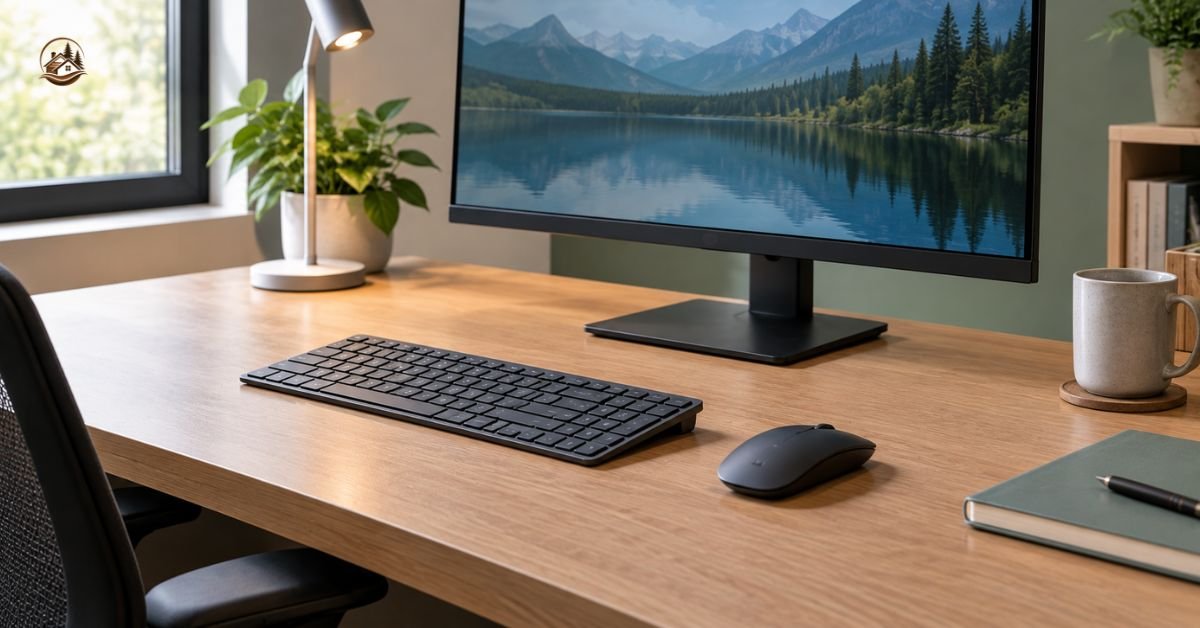
Wireless technology can make a workspace look cleaner by reducing the number of visible cables. A cordless keyboard, mouse, and other compatible devices can free up space around your main work area. It can also make cleaning the desk much easier.
Going cordless doesn’t mean removing every cable from the office. Computers, monitors, printers, and other equipment may still need power. Instead, focus on reducing unnecessary wires and keeping the remaining ones organized. A simple cable-free workspace can feel noticeably calmer.
Keep It Compact
A compact office doesn’t have to feel uncomfortable or incomplete. Choose home office furniture that serves more than one purpose, such as a desk with drawers or shelving that also works as display space. The right arrangement can help you make better use of space without overcrowding the room.
Keep only the items that support your work or make the room more useful. Store everyday essentials close by and move rarely used belongings into cabinets or higher shelves. With thoughtful planning, even a small room can become a functional workspace that feels open and comfortable.
FAQs
How can I organize my office without buying new furniture?
Start by removing unused items and giving everything a specific place. Reorganizing existing shelves, drawers, boxes, and cabinets can often make a noticeable difference before you spend money on anything new.
How do I keep my desk from getting cluttered?
Keep only frequently used items on the desktop. Use drawers, boxes, and nearby storage for everything else, and return items to their proper place after each work session.
What is the best way to organize a small office?
Use vertical storage, wall-mounted shelves, compact furniture, and multi-purpose pieces. These options help you save floor space while still providing enough storage.
How can I hide office cables?
Start with simple cable management solutions such as clips, sleeves, and desk openings. Keep similar cables together and remove chargers or wires that you no longer need.
How do I make my home office feel more organized?
Combine practical storage with a simple layout. Keep frequently used items within reach, hide unnecessary clutter, and leave enough open space around your main work area.
Conclusion
A well-organized office doesn’t require a huge room or expensive furniture. With smart shelving, useful storage, better lighting, and a thoughtful desk setup, you can turn even a limited space into a comfortable place to work.
The best Office Organization Ideas are the ones you can actually maintain. Give every important item a home, make better use of available space, and keep unnecessary clutter under control. Small changes can make your workspace feel cleaner, calmer, and much easier to use.

Welcome to BuildHypcabin! My name is Farhan, and I’m an SEO Expert with several years of experience in SEO, link building, and website growth. I’m passionate about helping websites improve their online visibility and reach the right audience.
At BuildHypCabin, I share informative and useful blogs on different topics to provide readers with practical and easy-to-understand information. For SEO-related questions, collaborations, or any other inquiries, feel free to contact me.
1 thought on “15 Office Organization Ideas for a Clutter-Free Space”