

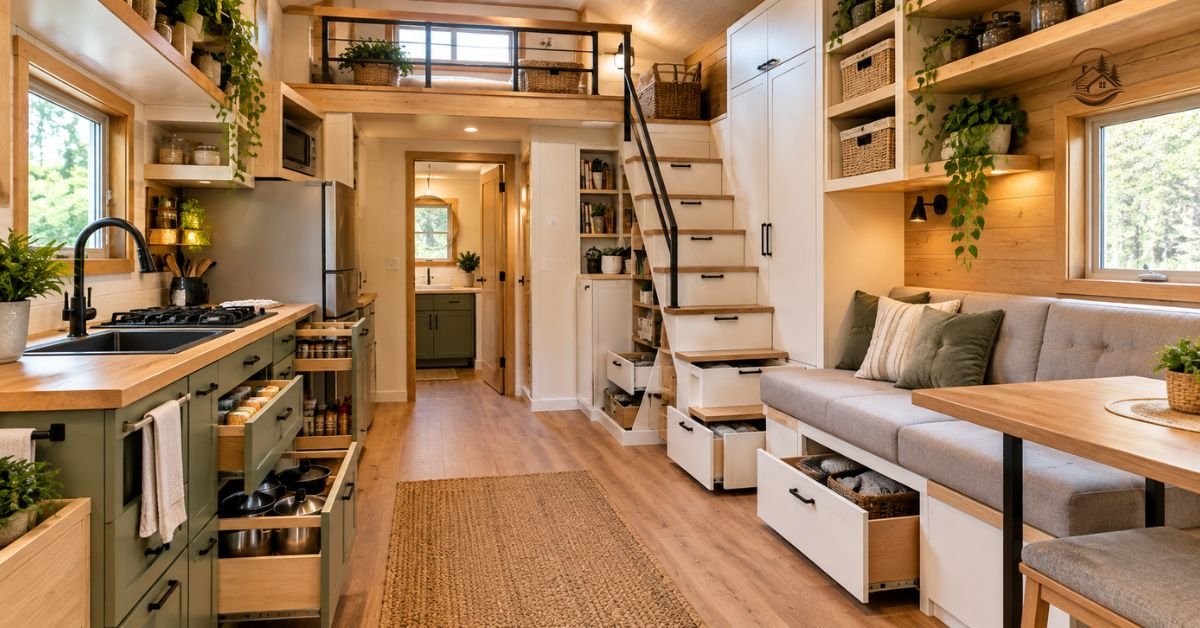
Living in a tiny house can feel comfortable and practical when every item has its place. The challenge begins when everyday belongings start taking over your limited floor space. Clothes, kitchen tools, books, cleaning supplies, and personal items can quickly make a small home feel crowded.
The good news is that you don’t need a bigger home to stay organized. With smart planning, you can turn unused walls, corners, stairs, and furniture into useful storage areas. These tiny house storage ideas can help you make better use of your space while keeping your home comfortable and clutter-free.
Under-Bed Storage
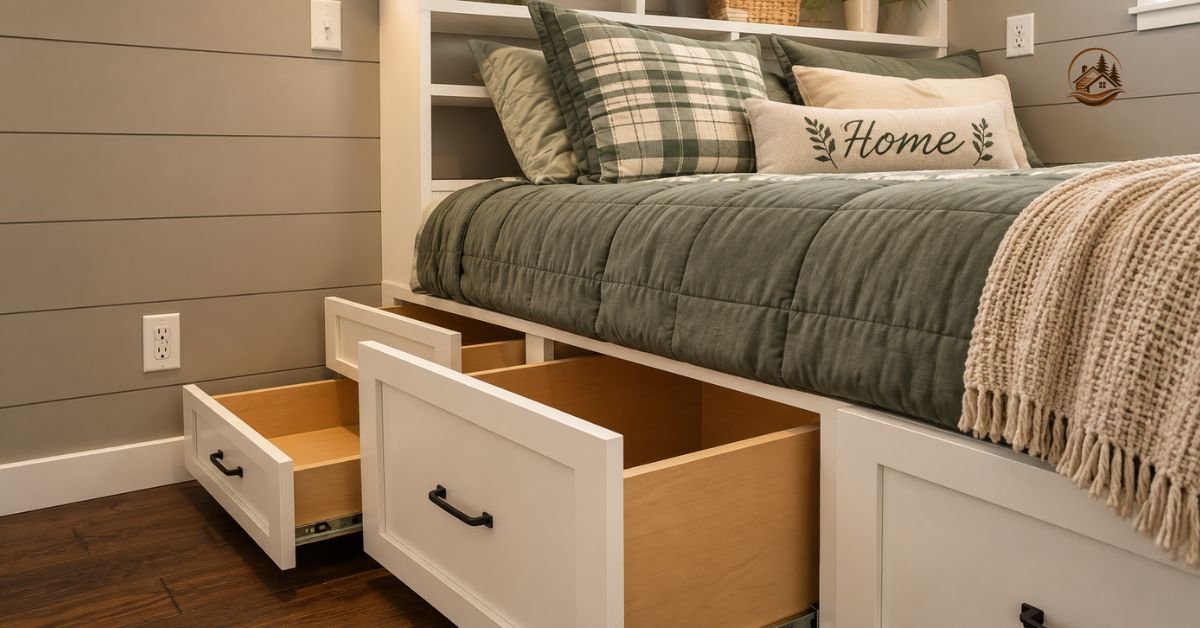
The space beneath your bed is one of the easiest areas to turn into useful storage. Instead of leaving this area empty, add drawers, rolling boxes, or storage containers. You can use it for seasonal clothes, extra bedding, shoes, towels, or items you don’t use every day.
Under-bed drawers are especially useful because they keep belongings hidden while making them easy to reach. Choose containers that fit neatly beneath the mattress and label them so you can find things quickly. This simple approach gives you extra storage without taking up additional floor space.
Read More Interesting Article? Click Here
Wall-Mounted Shelves
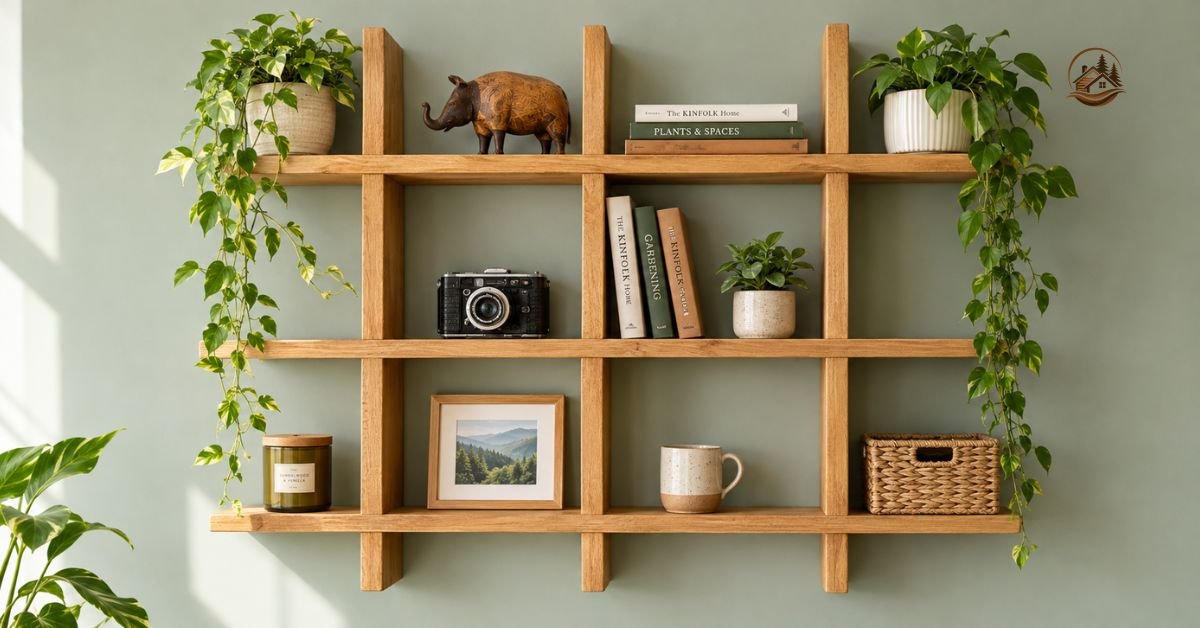
Walls provide valuable vertical storage in a tiny home. Wall-mounted shelves can hold books, plants, kitchen supplies, decorative items, or small storage bins without using valuable floor space. They also make frequently used items easier to access.
Install shelves above desks, kitchen counters, sofas, or bathroom areas where appropriate. You can use several narrow shelves instead of one large unit. This keeps the room open while giving you more places to organize everyday belongings.
- Use vertical wall space for extra storage.
- Add shelves for books, plants, kitchen supplies, or small bins.
- Install shelves above desks, counters, sofas, or bathroom areas.
- Choose narrow shelves to keep the room feeling open.
- Keep frequently used items within easy reach.
- Use multiple small shelves instead of one large unit.
Built-In Cabinets
Built-in cabinets are a practical choice when you want storage that fits your home perfectly. Unlike large freestanding furniture, built-in storage can be designed around walls, windows, appliances, and other fixed features. This helps you use awkward spaces more efficiently.
Consider adding cabinets from floor to ceiling where possible. Include a combination of drawers, shelves, and closed compartments for different belongings. Closed cabinets are particularly useful because they keep visual clutter out of your living area.
Under-Stair Storage
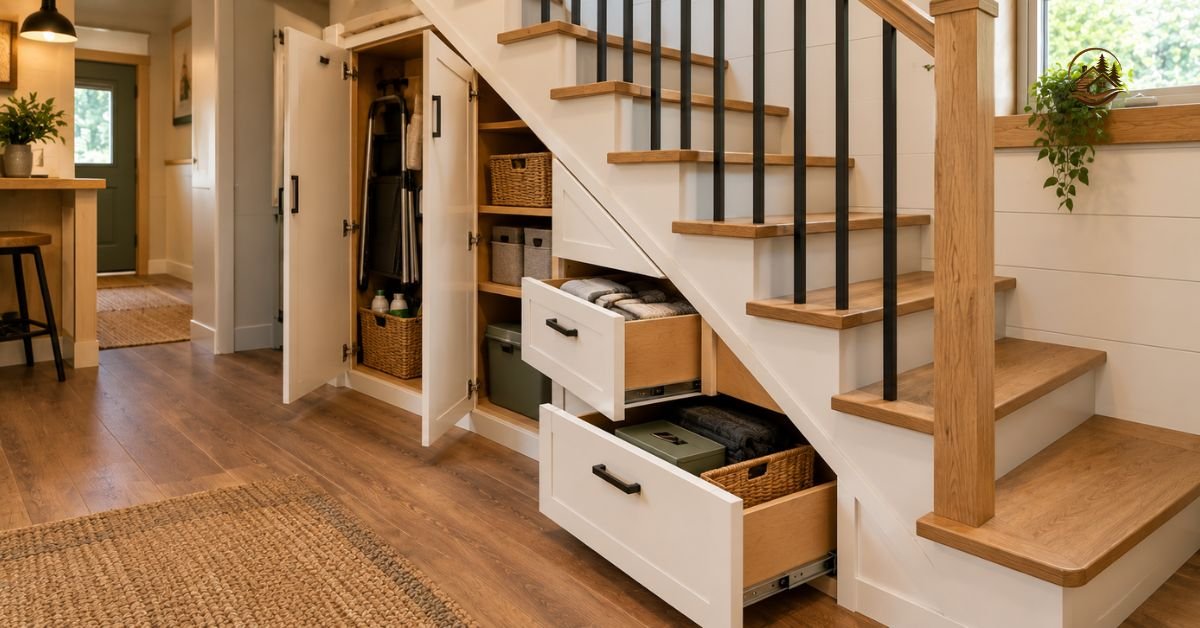
If your tiny house has stairs, don’t let the space underneath them go unused. The area beneath stairs can become a valuable storage zone for shoes, clothing, cleaning supplies, books, or household equipment.
You can install pull-out drawers, small cabinets, or open shelves beneath the staircase. Each section can serve a different purpose. Even a narrow stair area can provide useful storage when the design takes advantage of its shape.
Multi-Purpose Furniture
Furniture that performs more than one job is ideal for small homes. A storage ottoman, sofa with hidden compartments, or bed with built-in drawers can provide both comfort and storage without requiring extra furniture.
A dining table can also include drawers or shelving for kitchen items. Folding furniture is another smart option because you can move or fold it away when you need more room. When choosing furniture, think about how many functions one piece can provide.
Overhead Storage Space
The area above eye level is often forgotten, but it can provide plenty of extra storage. Overhead cabinets and shelves can be installed above doors, kitchen counters, desks, and other suitable areas.
Use overhead storage for things you don’t need every day. Extra blankets, luggage, seasonal decorations, and rarely used kitchen equipment can stay there. Just make sure frequently used items aren’t stored too high, especially if you need a ladder to reach them.
- Use the space above eye level for extra storage.
- Install cabinets or shelves above doors and kitchen counters.
- Store blankets, luggage, and seasonal decorations overhead.
- Keep rarely used kitchen equipment in higher storage areas.
- Avoid storing frequently used items too high.
- Make sure overhead storage is safe and easy to access.
Hidden Storage Compartments
Hidden storage is useful when you want to keep belongings out of sight. Storage compartments can be built into benches, steps, furniture, walls, or other areas that normally have unused space.
These compartments work particularly well for valuables, seasonal belongings, extra linens, or items that aren’t needed regularly. However, don’t create hidden spaces that are difficult to access. Good storage should save space while still making your belongings easy to retrieve.
| Storage Area | Best For | Main Benefit |
| Benches | Blankets, shoes, cushions | Uses unused seating space |
| Steps | Shoes, tools, small items | Makes use of stair space |
| Furniture | Seasonal items, linens | Keeps belongings out of sight |
| Walls | Small belongings, valuables | Saves floor space |
| Under-bed areas | Extra linens, seasonal items | Provides hidden storage |
| Unused corners | Less-used belongings | Makes use of overlooked space |
Corner Storage Solutions
Corners are often difficult to furnish, but they can become useful storage areas with the right approach. Corner shelves, narrow cabinets, and custom-built units can transform these unused spaces into practical storage.
In the living room, a corner shelf can hold books or decorations. In the kitchen, a corner cabinet can store cookware or pantry items. Even small corners can contribute to your overall storage capacity when you look beyond traditional furniture placement.
Entryway Storage Space
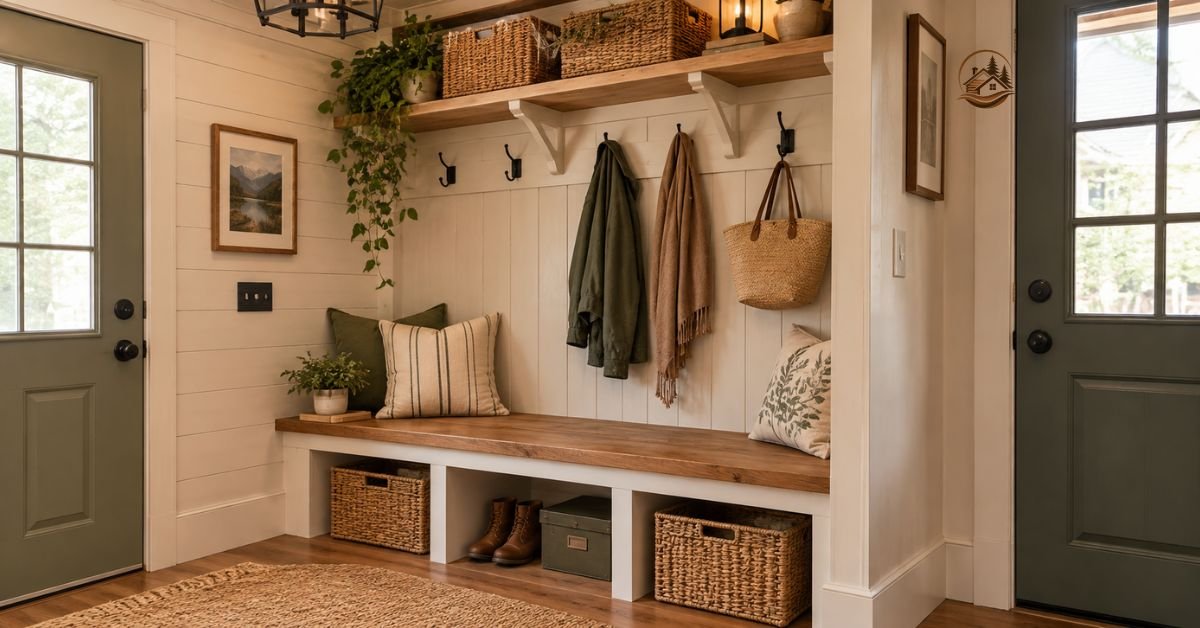
The entrance of a tiny house can quickly become messy because shoes, coats, bags, and keys tend to collect there. Creating a dedicated entryway storage area can prevent this clutter from spreading into the rest of your home.
Install hooks for coats and bags, a narrow shoe rack, or a small bench with storage underneath. A wall-mounted organizer can also provide a place for keys and small everyday items. The goal is to make putting things away quick and convenient.
Declutter Your Tiny House
Even the best storage system won’t work well if you keep more belongings than you actually need. Decluttering is an important part of organizing small spaces because every item takes up valuable room.
Start by sorting your belongings into three groups: keep, donate, and discard. Ask yourself how often you use each item and whether it serves a real purpose. Once you reduce unnecessary belongings, your existing storage will become much more effective.
FAQs
What is the best storage solution for a tiny house?
Built-in cabinets, under-bed drawers, wall shelves, and multi-purpose furniture are among the most useful options. The best choice depends on your layout and the items you need to store.
How can I maximize storage in a small home?
Use vertical space, unused corners, areas under furniture, and hidden compartments. Choosing furniture with built-in storage can also help you maximize limited space.
Is open or closed storage better for a tiny house?
Both can work well. Open shelves make items easy to access, while closed cabinets help create a cleaner and less cluttered appearance.
How do I organize a tiny house kitchen?
Use wall shelves, hooks, cabinet organizers, pull-out drawers, and compact appliances. Keep frequently used items close to your main cooking area.
How can I prevent clutter in a tiny home?
Regularly remove items you no longer need and give every remaining item a specific place. Avoid keeping duplicate or rarely used belongings unless they have a clear purpose.
Conclusion
A small home can still feel spacious when you use its available space wisely. The key is to look beyond traditional cabinets and closets. Walls, corners, stairs, furniture, and even the space beneath your bed can become useful storage areas.
The best approach is to combine different storage solutions based on your home’s layout and your daily habits. Start with the areas that currently create the most clutter, then add practical solutions one at a time. With thoughtful organization, your tiny house can stay comfortable, functional, and easy to maintain.

Welcome to BuildHypcabin! My name is Farhan, and I’m an SEO Expert with several years of experience in SEO, link building, and website growth. I’m passionate about helping websites improve their online visibility and reach the right audience.
At BuildHypCabin, I share informative and useful blogs on different topics to provide readers with practical and easy-to-understand information. For SEO-related questions, collaborations, or any other inquiries, feel free to contact me.